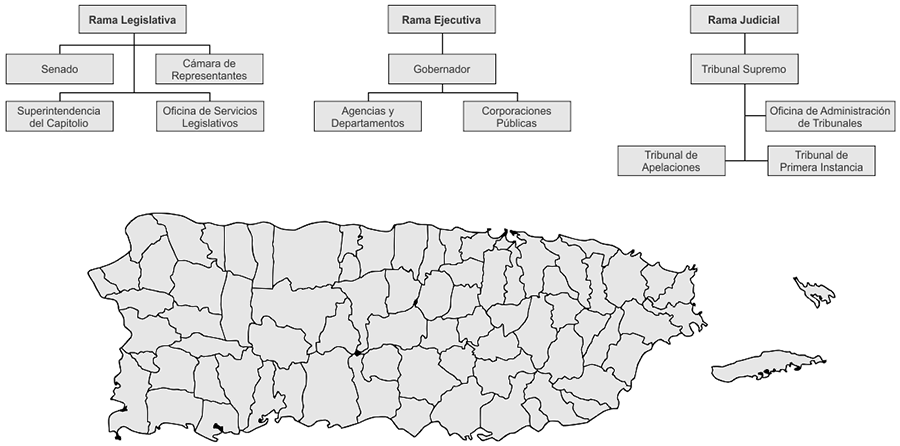
Section 22 of Article III of the Constitution of the Commonwealth of Puerto Rico of July 25, 1952 establishes that: The Comptroller shall audit all the revenues, accounts and disbursements of the Commonwealth, of its agencies and instrumentalities, and of the municipalities, to determine whether they have been made in accordance with the law. He shall render annual reports and all such special reports as may be required of him by the Legislative Assembly or the Governor.
Article 3 of Act No. 9 of July 24, 1952, as amended, establishes that: In the exercise of these functions, particularly in the conduct of compliance audits and any other audits, the Comptroller shall employ and must comply with the established provisions of the highly accepted auditing standards published in the “Generally Accepted Government Auditing Standards (GAGAS),” known as the “Yellow Book,” developed and published by the Comptroller General of the United States of America. As auxiliary and complementary reference sources, he may, in a manner compatible with the “Yellow Book” standards, use any other resources and methods that are in accordance with current practices in the examination of accounts.
These are covered in N-DA-1 Auditing Standards.
Section 22 of Article III of the Constitution of the Commonwealth of Puerto Rico of July 25, 1952 establishes that: In the performance of his duties, the Comptroller shall be authorized to administer oaths and statements and to compel, under penalty of contempt, the appearance of witnesses and the production of books, letters, documents, papers, records, and all other items necessary for a complete knowledge of the matter under investigation.
Section 22 of Article III of the Constitution of the Commonwealth of Puerto Rico of July 25, 1952 establishes that: There shall be a Comptroller who shall be appointed by the Governor with the advice and consent of a majority of the total number of members composing each House. The Comptroller shall meet the requirements prescribed by law; he shall hold office for a term of ten years and until his successor is appointed and takes office.
Article 2 of Act No. 9 of July 24, 1952, as amended, provides that: No one may be Comptroller unless he has reached thirty years of age and is a citizen of the United States of America and a bona fide citizen and resident of Puerto Rico.
The Office of the Comptroller has a performance evaluation system for all its personnel that, among other things, seeks to create an environment of continuous improvement in the organization. This evaluation system is based on Regulation 10, Regulation for the Administration of Human Capital of the Office of the Comptroller of Puerto Rico, which is an internal regulation and governs the conduct of our organization's human capital.
This management tool is used to define, evaluate and direct the desired performance of each member of the Office, and its handling is essential to achieve the established objectives and initiatives. Achieving these objectives requires fostering the development of its personnel so that they reach the highest levels of excellence, productivity, effectiveness, efficiency and discipline. For the purposes of the process to follow in conducting the evaluations, the Office also has an approved internal procedure used by the evaluator and the evaluee. The system the Office implemented clearly defines and specifies the objectives, criteria and institutional values by which each official's or employee's performance is measured and, at the same time, recognizes their merits and contributions.
As a general rule, the evaluation cycle covers 12 months. The criteria our performance evaluation system measures are:
Some types of audit the Office may conduct are the following:
At the Office of the Comptroller, a Strategic Planning and Annual Audit Planning process begins. In the strategic planning of audits, a three-year plan is developed using general criteria such as: added value, materiality, relevance, and vulnerability. In addition, the selection of entities may sometimes reflect legal conditions or requirements, for example: audit units that by law are required to be audited within a specific time; requests from the Comptroller or the Deputy Comptroller; requests from the Legislative Assembly or the Governor.
Yes, our Office audits entities' compliance with social programs. Among these we can highlight:
Yes. Every year, all Office of the Comptroller personnel receive training on Ethics and Sexual Harassment.
In accordance with Act No. 9 of July 24, 1952, as amended, “the Comptroller may publicize any reports of his Office once he has brought them to the attention of the Governor and the Legislative Assembly.”
To ensure the proper distribution and publication of these reports, there is Regulation 30, Distribution of Audit, Special and Annual Reports of the Office of the Comptroller of the Commonwealth of Puerto Rico, and Procedure P-G-33.
Once the audited entity receives the report, the Press and Communications Office publishes it on the website and on social media. It then emails the Notification to the Press, to the audited entity, the Governor, the Legislative Assembly and the entities where it has recommendations, if applicable.
In addition to audit and special reports, OCPR issues other official documents such as circular letters, the budget memorandum and information of interest to the public, among others, all available on the page www.ocpr.pr.gov.
Our Office has the authority to audit all the revenues, accounts and disbursements of the Commonwealth, of its agencies and instrumentalities, and of the municipalities.