The result of the initiative, in which other countries will participate, will be known at the end of 2024, said Yesmín Valdivieso.
The result of the initiative, in which other countries will participate, will be known at the end of 2024, said Yesmín Valdivieso.
As part of a global effort, the Office of the Comptroller of Puerto Rico will measure, this month, the government's actions in the areas of governance, financing and public policies in response and preparation for climate change.
“With this project, we join other audit institutions around the world to carry out independent evaluations. In this way, we can obtain reliable information on financing, governance and public policies related to global warming and climate change in Puerto Rico,” said Comptroller Yesmín M. Valdivieso, in written statements.
As part of the project, the office will gather information on the initiatives developed by the instrumentalities regarding their participation in addressing this problem, which has already begun to disrupt the lives of the most vulnerable communities. Heat waves and episodes of extreme rain –among other events worldwide– are examples of the effects of climate change, experts have warned.
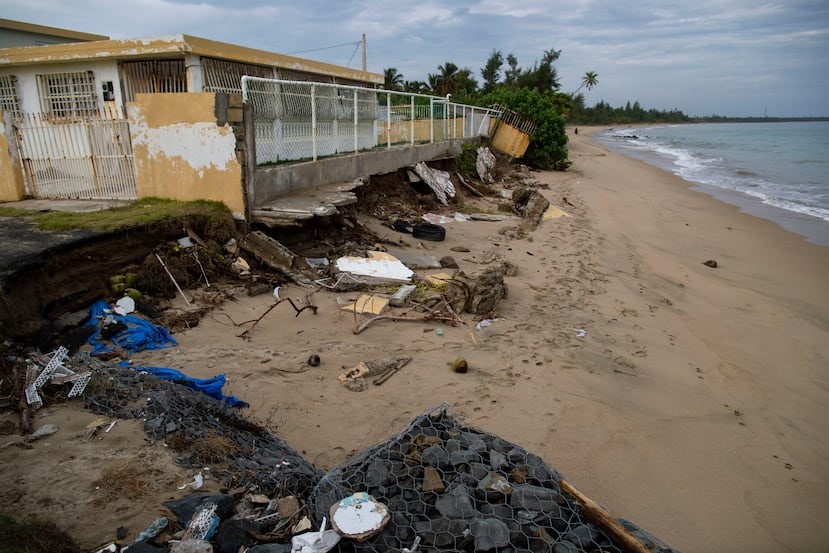
“We know that laws have been passed, that there is an advisory group on climate change, but the reality is that we don't know what has been done. Every time someone thinks of climate change, they think of solar panels, as if that were the beginning and the end… but we have to go further. We have to address coastal erosion, the impact of hurricanes on vegetation…,” Valdivieso enumerated.
For the analysis, she explained that the Climate Scanner tool will be used, through which the supreme audit institutions (EFS) seek to provide accessible and quality information, identify the challenges and priority topics for government action, strengthen the EFS's capacities in carrying out their functions, consolidate local data with global data, and develop future audits.
In addition, the project –which follows a standardized methodology– seeks to share experiences and contribute to the efforts of the International Organization of Supreme Audit Institutions (INTOSAI, in English).
“I want to make sure that, when we think of an audit, we don't only think about whether or not the law was complied with, and it's not that it isn't important, because it is, but I have always wanted the Office to provide oversight and to go further. That is the seed I would like to leave sown, no matter if I leave in a month or six months…,” Valdivieso said.
The initiative is recognized
Experts consulted by El Nuevo Día supported the Office of the Comptroller's effort, but lamented that, at the legislative level, the opportunity was missed to have a document that not only defined the courses of action and public strategies to address this problem, but also set out the metrics to follow.
Earlier this month, Representative Edgardo Feliciano, who was leading the discussion in the Legislative Assembly on the Climate Change Mitigation, Adaptation and Resilience Plan, announced that he would not recommend the approval of the document, so its evaluation was left in the hands of the representatives and senators who are elected on November 5.
Feliciano then alleged that the document of over 600 pages –prepared by the Committee of Experts and Advisors on Climate Change (Ceacc)– had been delivered late, a claim that has been rejected by the working group. “The metrics I understood were going to be used to measure the agencies' performance were established in the plan… If it had been approved, we would have specific metrics and could go against those metrics and fine the agencies that did not comply with the law,” stated Dr. Rafael Méndez Tejeda, member of the Ceacc.
As part of preparing the document, Méndez Tejeda said, they had met with the General Services Administration (ASG) to discuss compliance with Act 33 of 2019, which requires the government –starting that year– to acquire hybrid vehicles or those that operate with methods alternative to fossil fuels. “I doubt that some agencies have complied with the law and done so,” he asserted.
Dr. Pablo Méndez Lázaro, also a member of the Ceacc, welcomed the comptroller's initiative, but likewise highlighted similar efforts, such as the Islands 2030 Network, a project he leads locally from the Caribbean Climate Adaptation Network (CCAN) and Sea Grant. “It seeks to establish those metrics and compliance standards of the different islands with respect to climate change,” he explained.
Valdivieso maintained that, during this process, she hopes to meet with the Institute of Statistics and the Department of Natural and Environmental Resources (DRNA), as well as with the members of the Ceacc. “More than a kind of monitoring, it is seeing where we are and where we are going and whether there is a plan. Do we have the tools? Do we have the financing?,” the comptroller emphasized.


Some documents on this page are saved in PDF format.
To view these documents, you must have the following free program installed.