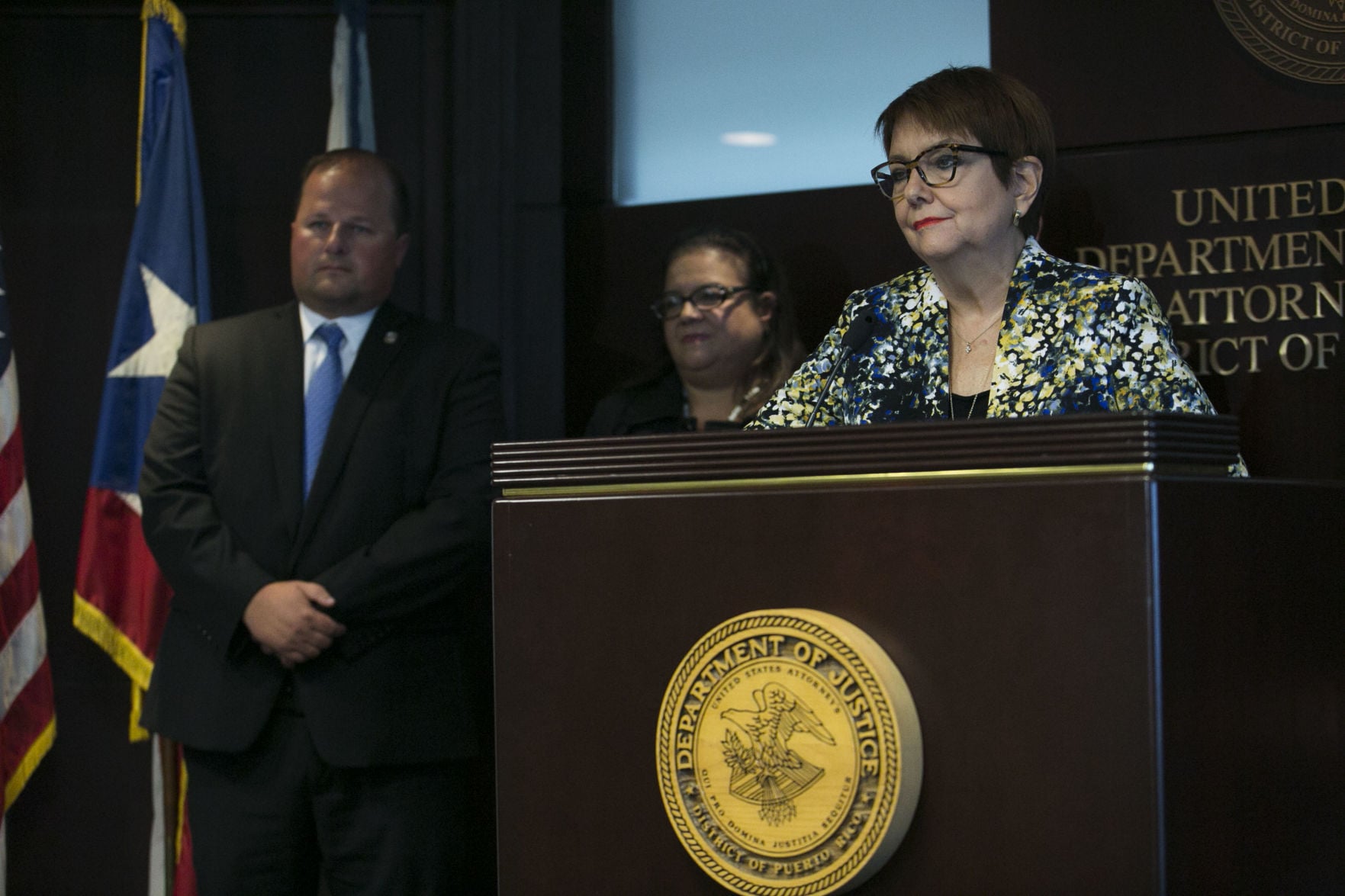
In the photo, Rosa Emilia Rodríguez, head of the federal Prosecutor's Office.
The arrest of Senator Abel Nazario for violations of federal laws during his tenure as mayor of Yauco is an atypical case among the recent charges against municipal officials, where the illegal acts usually involve under-the-table transactions with contractors or other people who provide services to the municipalities.
The federal Prosecutor's Office declined to give important details of the charges against Nazario, such as, for example, how the former mayor benefited from the acts of which he is accused. However, yesterday's events did make one thing clear: the Office of the Comptroller of Puerto Rico received a resounding show of support from the federal authorities.
Although this entity's reports on the income, accounts, and disbursements of the municipalities (which by law are audited every two years) are the ones that most transcend in public discussion, the reality is that the Office of the Comptroller has the ministerial duty to audit all government agencies and bodies, and to report those practices that are carried out outside the law.
With very few exceptions, the Office of the Comptroller's reports on the fiscal operations of the municipalities invariably contain findings that should spark interest among local government investigative bodies. Every report that office issues should be required reading at the Department of Justice of Puerto Rico.
Construction without permits, contracts worth thousands of dollars agreed upon verbally, and purchases without bidding are some of the findings that consistently fill the pages of the Comptroller's reports, and although some of these findings could be attributed to human error, the truth is that many municipalities repeat the same illegal practices, with the well-known costs to the treasury. It is no wonder that the municipal coffers of many towns are in a precarious state.
For years, Comptroller Yesmín Valdivieso has fought to have the value of her office recognized in the important task of safeguarding the proper use of public funds. But the central government turns a blind eye to most of the referrals that come out of this office, and some mayors take the findings as mere recommendations, without feeling obligated to put them into practice.
However, as the case against Abel Nazario demonstrates, the feds are indeed paying attention to the Comptroller's audits.
According to the indictment, the Office of the Comptroller detected in 2013 that in the municipality of Yauco there were employees who were required to work two voluntary hours daily. Determining this to be a violation of federal law, the U.S. Department of Labor explained to the mayor that he had to pay these salaries and certify these disbursements.
Then in 2016, during a routine audit of the municipal government, the Office of the Comptroller once again found more irregularities, such as employees who, although they had received their pay, the municipality unilaterally began to withhold their salaries without the consent of the federal Department of Labor. The matter was referred to that agency, which in November 2016 referred it to the Office of the Inspector General.
It is also worth recalling the FBI's collaboration with the Comptroller in the case in which two employees of the municipality of Toa Baja were charged with allegedly conspiring to fraudulently obtain property from a program that received federal funds.
These are not the only cases of effective collaboration between the federal authorities and the Comptroller.
Speaking with Valdivieso for the writing of this piece, the Comptroller told us that the feds always respond when she calls them.
Let the local authorities follow her example.


Some documents on this page are saved in PDF format.
To view these documents, you must have the following free program installed.