Comptroller Yesmín Valdivieso advanced the development of two divisions specialized in data analysis and fiscal intelligence as a measure to detect government corruption more efficiently and timely.
As the presentation, processing, and storage of documents in the public administration of agencies, corporations, and municipalities became more sophisticated, new ways to corrupt and defraud the system also emerged.
In many cases these are the old practices of corruption, such as the falsification and alteration of quotations and invoices, but now through the use of digital technology to register documents as if they were genuine.
Of course, the use of more intricate maneuvers that allow the diversion of funds through electronic banking transactions and other refined schemes to defraud the treasury also operates within the system.
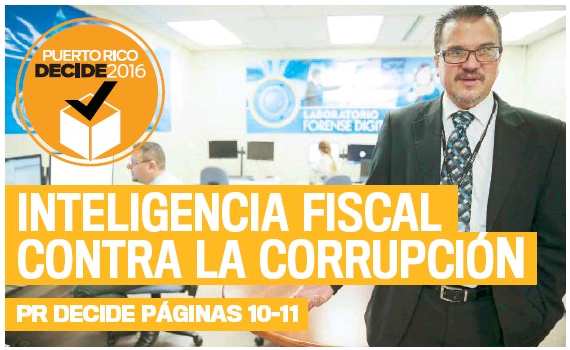
Given the complexity of those systems and that of proving this criminal activity in the courts, the Office of the Comptroller of Puerto Rico (OCPR) created in 2011 the Division of Data Analysis, Digital Forensics, and Technological Development, explained its director, Iván Denizac.
This division uses available technology to identify, extract, and preserve data from any electronic device, whether computers, mobile phones, or tablets, to then analyze the information obtained and issue conclusions.
“This unit is specialized and unique in Puerto Rico because they (the analysts) already come with a background of knowledge in the area of accounting,” explained Denizac, who has worked at the OCPR for 27 years. “They (the analysts) can not only find electronic evidence and present it to the auditor, but they can also gather information and establish what is an opinion, a conclusion of what they understand to be the scheme that may be occurring,” he added.
This division has eight employees, most of whom have university studies in accounting and business administration, which allows them to detect administrative, fiscal irregularities or violations of law. In addition, they have international certifications in digital forensics and have been trained in the area of fraud.
Among its officials, there is an attorney who is in charge, among other things, of ensuring that the gathered information complies with the rules of evidence and that the chain of custody is preserved.
Most of the cases in which the collaboration of the OCPR’s forensic analysts has been required are related to audits of government agencies, and it is in purchasing processes where fraudulent practices through the use of technology are most frequently seen, the director explained.
“There is a lot of creativity and we have discovered cases in which the auditor goes and examines the file of the purchasing process, and all the documents are there, and it is implied that everything is reasonably fine,” Denizac commented.
“However, when we intervene, we seize the computer and examine the documents, and we realize that the file the auditor saw was all recreated, that all of it was created four or five months later (after the purchasing process began),” the official recounted.
Denizac indicated that the illegal practice of altering quotations that arrive electronically in Excel or Word formats has spread among some government and municipal employees, and thus they “modify the amounts, raise them or lower them” to benefit a particular company.
“But in the metadata of the electronic document it is recorded who was the last to access it, the last to print it, and whether there were modifications,” Denizac noted. “If it were not for this type of resources and effort being made within the Office of the Comptroller, that file would have passed as correct,” he added.
The official clarified that the forensic intervention is carried out only when it is reasonably presumed that the electronic device was used for the commission of an irregular or illegal act.
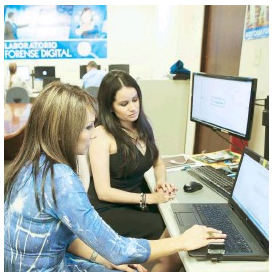
Once the official in charge of the audit has that suspicion, they meet with Denizac, explain what they found, and, if the director understands that there is a need to examine it, a forensic case is created and examiners are assigned.
“As members of the Office of the Comptroller, we have the authority to request access to everything that is public property and, among it, are technological equipment,” the director mentioned. “We arrive, identify the equipment of interest… and immediately initiate a forensic protocol. Among the initial steps, and most importantly, is the preservation of evidence,” he elaborated.
OCPR officials can take the equipment to work on it in the forensic laboratory —located in Hato Rey, though outside the Comptroller’s headquarters—, but they can also make the images at the intervened location if it is essential for the continuity of services in that office.
“Once we make the corresponding forensic copies —those required by the best international practices for digital evidence handling—, the process of information extraction begins and of recovering any information that may have been deleted from the disks because, even if they delete it, we are going to recover it. We have specialized tools for that purpose,” Denizac said. “We begin to search for documents of pertinent interest for the investigation and to share them with the auditor in charge of the audit, and so we go building that necessary digital evidence,” he detailed.
This division collaborates with the Institute of Forensic Sciences (ICF) and with the Department of Justice. The ICF has its own digital forensics unit, but when it comes to white-collar crimes they usually refer it to the OCPR. Meanwhile, the DJ has used the knowledge of these analysts for various investigations.
WITH AN EAR TO THE GROUND. To strengthen the tools available to oversee public management, the OCPR also organized an Office of Complaints and Fiscal Intelligence with the purpose of promptly addressing the complaints that arrive about possible irregular or criminal acts in the state agencies and municipal entities. Its director, Egda Magaly Pagán Rivera, explained that her staff can launch a preliminary investigation into the complaints they receive without having to wait for the OCPR to conduct an audit at the agency, corporation, or municipality about which the complaint was received.
Once the complaint is received, a jurisdictional analysis is carried out: if they understand it is a matter within the OCPR’s purview, they carry out a preliminary investigation, but if they rule it out as a matter to be addressed by the Office of the Comptroller, they make the referral to the competent entity.
Based on that preliminary investigation they may recommend that an audit be done immediately or that the case proceed to be closed if they determine the complaint has no merits, Pagán Rivera explained.
This division, which is attached to the office of the deputy comptroller, Natanael Arroyo, receives more than 700 complaints a year.
The office has a fiscal intelligence analyst who is in charge of obtaining and interpreting the information on the databases that the OCPR has available, whether by provisions of law or by collaborative agreements with other agencies.
“We unite everything we have in data and information and give it an interpretation so that there is knowledge, and it is directed with conclusions that can help the investigators complete their investigations,” noted Joan D. Batista Manzano, fiscal intelligence analyst of the OCPR.
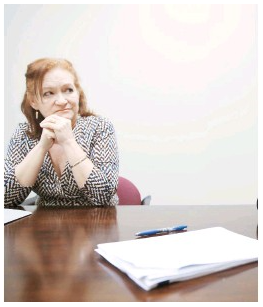
Egda Pagán Rivera and Iván Denizac explained that the divisions they direct were created to strengthen the oversight tools through the use of technology and the interpretation of information on the databases that the Office of the Comptroller has available.
Rivera Pagán announced that they plan to launch a mobile application this year to make it easier for complainants to send information, photos, and documents about possible irregular acts they observe within the government administration.
“What we want is for them to see the presence of the OCPR (in government entities) not only when an audit is going to be done,” expressed the director of this complaints office.
Iván Denizac: “We work from the seizure of equipment, the extraction of data at the laboratory level, and the preparation of the report with conclusions.”
$400,000 The OCPR INVESTMENT allocated this sum to develop this specialized division.
29 PROCESSES ASSISTED This is the number of cases in which the Division of Data, Digital Forensics, and Technological Development has intervened to support audit findings.


Some documents on this page are saved in PDF format.
To view these documents, you must have the following free program installed.